

Cincinnati has Jonathan India currently playing second base at the big league level. The 2021 National League Rookie of the Year battled injuries throughout the 2022 season and had a sophomore slump. Still, the front office is almost assuredly counting on him to be a part of the team’s future. India, though, could potentially move back to third base for the Reds if needed (either for reasons directly involving his health, abilities, etc. or because there’s another option for second base but not for third).
In the post-trade deadline Reds Top 25 Prospect list only one player was on the list and was a guy who spent a majority of their time at second base this season. There were several others who did see action at second base in a decent amount of their time that we’re going to consider both here at second base as well as other spots in future versions of this series.
We’re going to start with the lone player listed as a second baseman on the Top 25 prospect list at the post-trade deadline point. Carlos Jorge spent his entire season with the Arizona Complex League Reds in 2022. Jorge had a big year in 2021 in the Dominican Summer League, and while he didn’t quite match that this past season he was among the best hitters in the league. As an 18-year-old this season he hit .261/.405/.529 with 16 extra-base hits, 27 steals, 25 walks, and 41 strikeouts in 42 games played. He led the league in steals by a wide margin – no one else topped 16 in the league. It’s a long way to the big leagues from complex ball, but Jorge has passed the test at both levels he’s played at with flying colors.
Victor Acosta was acquired by Cincinnati at the trade deadline from San Diego in the Brandon Drury trade. He was one of the Padres big international signings in 2021, signing for $1,800,000. After arriving in the Reds organization he only played in one game out of nine at second base, but with the Padres he played in nine other games there (he started 30 games this season at shortstop).
The 18-year-old spent his season in the complex league out in Arizona, playing in 32 games with the Padres team and then 10 more with the Reds after the trade deadline. Between the two stops he hit .237/.348/.360 with 21 walks and 37 strikeouts in 165 plate appearances. A slow start really kept his numbers down. In the first 13 games he posted a .542 OPS while hitting just .150. Over the next two months he hit .282/.380/.408. He’s got plenty of tools to work with, but he’s still very young and like Jorge – it’s a long way from the complex leagues to the big leagues.
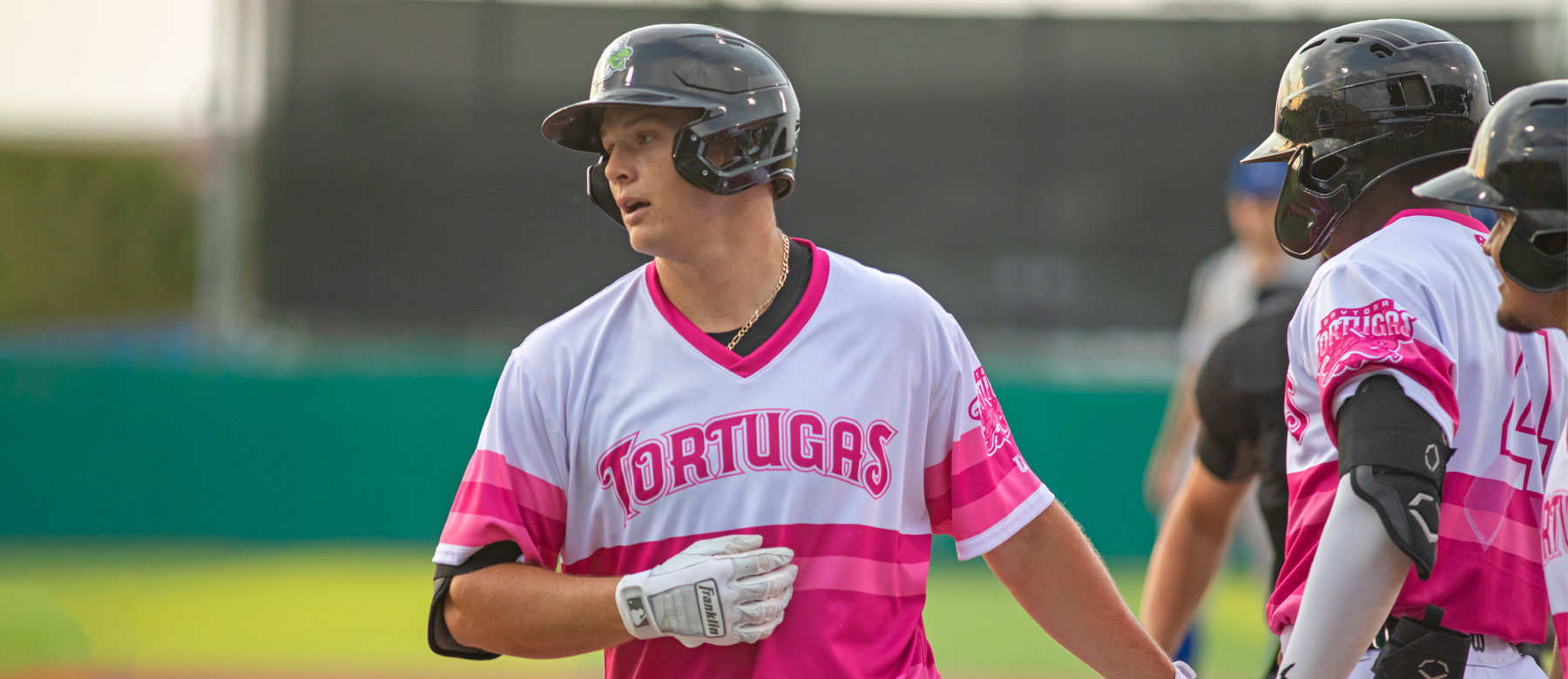
Moving up the ladder you get to Tyler Callihan. He has been ranked in the Top 25 in the past, but the bat has been more solid than carrying and the bat is what has been the selling card. The infielder injured his wrist near the end of spring training (and also missed the final four months of 2021 after tearing his UCL) and missed the first six weeks of the season before joining Daytona. With the Single-A Tortugas he hit .282/.336/.419 in 32 games before being moved up to High-A Dayton. After joining the Dragons he struggled to get his bat going and hit just .232/.297/.384 as his strikeout rate almost doubled.
Jose Torres split time between second and shortstop this season. He’s a guy who should be able to play shortstop long term, but also a guy who is behind several guys on the shortstop depth chart. He began the year swinging a hot bat, but cooled off in the middle of the summer before a good August. In the full season with High-A Dayton he hit .234/.287/.378 with 26 steals in 30 attempts. He’s going to need to find more consistency with his bat, but all of the pieces are there.
Another guy who saw limited action at second base while playing more time at another spot is Nick Quintana. Acquired from Detroit in the Tucker Barnhart trade, Quintana played 27 games at second base and another 76 at third base between his stops in Dayton and Chattanooga. The 2nd round pick from 2019 had struggled at the plate since being drafted, but he showed life in Dayton where he hit .257/.372/.421 with the Dragons in the first half. When he moved up to Double-A Chattanooga his plate discipline remained solid, but his hitting numbers dropped off as he hit just .233/.344/.355 in 53 games. It wound up being the best season of his career as he hit .245/.358/.387 for a career best .745 OPS.
Ivan Johnson didn’t join Chattanooga until the end of May after recovering from a broken hamate bone that he suffered in spring training. He struggled to start his season, hitting just .179 in the first 21 games he played. Over the next 29 games he hit .310/.339/.487, but his final game of the season was that 29th game was the final game he played as Johnson then went to the injured list for the remaining five weeks of the season with a shoulder strain. In his 50 games with the Lookouts he hit .261/.325/.428. He struggled with making contact, striking out 66 times in 197 plate appearances. That will be the biggest area he’ll need to improve on going forward.
Francisco Urbaez also spent plenty of time playing second base in Chattanooga this year. He began the season there and after a slow start in April where he put up a .641 OPS, he hit ,292/.362/.478 over the next 31 games. But that would be the end of the season for the infielder as he hit the injured list on July 6th when he tore the meniscus in his left knee.
After spending the first half of the season playing shortstop, Matt McLain began to play some second base in the second half with Chattanooga after Elly De La Cruz was promoted to join the team. By the time the season ended he had played 23 games at second to go along with getting 74 games of time at shortstop. At the plate he walked a lot, drawing 70 free passes in 103 games, and he showed off good power as he had 21 doubles, 5 triples, and 17 home runs. McLain also stole 27 bases in 30 attempts. But he struggled to hit for average, posting a .232/.363/.453 line. He’s likely going to need to hit for a higher average, but the underlying skills are there for that to happen.
Spencer Steer played a little bit of everywhere on the infield in 2022. Acquired from the Twins at the trade deadline, Steer played in 26 games at second base in the minors and another five in the big leagues late in the season. But he also played 20 or more games at shortstop and third base, as well as a baker’s dozen at first base. Steer played in both Double-A and Triple-A this season in the minors. He was better at the Double-A level where he posted a .976 OPS while still in the Twins organization. In his 71 games at the Triple-A level between the two organizations he hit .259/.354/.479. He showed more power with the Twins Triple-A team, but hit for a higher average after joining Louisville. In his 28 games with Cincinnati in the big leagues he hit.211/.306/.326.
Overview
There is certainly a whole lot of depth and potential future options for second base. More than a few of those options haven’t been playing second base as their main position, but have gotten some time there. While only Carlos Jorge was among the Top 25 prospects as a second baseman, he was just four guys who got some time at the position were in the Top 25.
Grade
While many of these guys spoken of in his piece are playing multiple positions, there are guys getting semi-consistent playing time. There’s a lot of depth that can cover second base, including multiple Top 25 guys, multiple Top 10 guys, and the depth is spread out from rookie ball up through the Major Leagues.
We’re going to give this position an A-. The only thing keeping it from being an A is that there isn’t a guy who feels like a sure-fire starter among this group. There are a few guys among this group that could certainly become every day players, but no one really separated themselves into that upper echelon level of prospect with very few questions on their resume.
Second Basemen Stats

You can see all of the State of the Farm series here.